
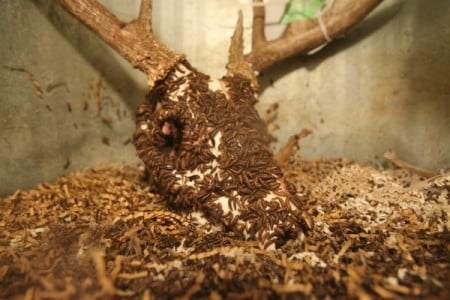
Dermestid Beetles for Sale in Canada – Skull Cleaning Beetles, often known as flesh-eating beetles or clean-up crews, are indispensable in a variety of fields, from forensic science to natural history taxidermy. They are champion decomposers, capable of meticulously cleaning flesh and soft tissue from bones and specimens, leaving behind perfectly articulated skeletons. For those who rely on these tiny biological agents—whether for preparing museum-quality specimens or for commercial skull cleaning—providing the correct habitat is paramount to maintaining a healthy, thriving, and productive colony. The choice of container and enclosure is not a minor detail; it is the single most important factor governing the colony’s success, preventing escape, and ensuring optimal environmental control.
A successful dermestid colony enclosure must satisfy three primary criteria: it must be secure to prevent escape, provide ample ventilation to manage humidity and odors, and be easy to clean and maintain. Neglecting any of these elements can lead to colony collapse, odor issues, or, worse, an infestation in your home or facility.
The Essential Enclosure Characteristics: Security and Ventilation
Dermestid beetles, particularly their larvae (the stage responsible for most of the cleaning), are determined escape artists. A small gap or crack can quickly become an exit route. Therefore, the enclosure must be virtually airtight except for the designated ventilation ports.
The most widely accepted and effective containers are large, clear plastic storage totes or aquariums. Plastic totes, typically 50 to 100 gallons in size, are often preferred due to their light weight, ease of modification, and affordability. They must feature a tight-fitting, latching lid. The key to security lies in modifying the lid. Dermestids cannot climb smooth plastic well, but they can exit through ventilation gaps. All ventilation ports must be covered with extremely fine-mesh screen, such as cheesecloth, nylon stockings, or, ideally, fine metal mesh like aluminum window screen. The mesh must be securely fastened to the cutouts in the lid with strong adhesive or silicone caulk, ensuring no gaps remain where the smallest larvae could squeeze out.
Ventilation is critical because the decomposition process and the beetles’ own metabolism generate significant moisture and heat. Poor ventilation leads to high humidity, which encourages the growth of mold and mites—the two most destructive enemies of a dermestid colony. Mold can quickly kill larvae and ruin specimens. Good ventilation, often achieved by cutting large sections from the lid and replacing them with mesh, allows moisture to dissipate and keeps the bedding dry, maintaining the necessary low-humidity environment.
Size and Layout: Providing Space for Growth
The size of the enclosure must correspond to the size of the colony and the volume of work being processed. Cramped conditions lead to overcrowding, stress, increased heat, and cannibalism among the larvae. A general rule of thumb is to provide enough surface area for the colony to spread out naturally.
The enclosure should be wider than it is tall, maximizing floor space. Within this container, the layout should include three distinct zones, which a good container must accommodate:
- The Feeding Area: A clean, accessible area where specimens are placed for cleaning.
- The Living/Breeding Area: This is where the beetles spend most of their time. It requires a substrate or bedding material.
- The Pupation Area: Beetles need a medium to pupate (turn from larvae to adult).
Common bedding materials include shredded paper, wood shavings (avoid cedar, which is toxic), or Styrofoam blocks. The bedding provides a place for the beetles to hide, lay eggs, and regulate temperature. The depth of the bedding should be at least six to eight inches to allow the larvae to burrow.
Conclusion: A Controlled Microclimate
The ultimate goal of choosing and preparing a dermestid beetle enclosure is to create a controlled microclimate that maximizes the beetles’ natural decomposition abilities while minimizing the risk of escape, disease, and odor. This requires a strong, well-ventilated container, a consistent warm temperature, and a commitment to frequent cleanliness checks. By treating the container as the strategic home base for these essential biological tools, the user ensures a productive, efficient, and long-lasting colony capable of yielding clean, high-quality specimens for years to come.